Merchant Adventurers Hall in York
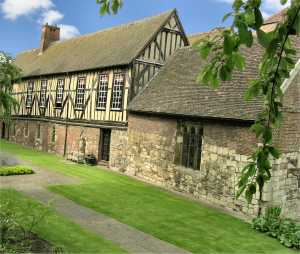
The Merchant Adventures Hall in York is an well preserved ancient Guild
Hall. It is made up of several anti-rooms and a Great Hall.
There are many portraits, guild banners, antique furniture
and a silver collection
within, worthy of note. Merchant adventurers financed overseas
trade and have a long history in York. They built this
building between 1357 and
1361 as a headquarters, where they could meet.
An Ancient Guild Hall
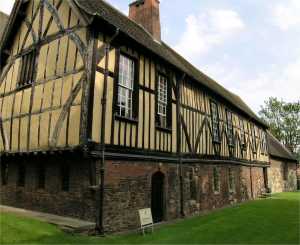
The building is categorized as a guildhall, which is where a guild met and discussed its affairs. Each guildhall has three types of rooms: business, charitable and religious. These are known here as the Great Hall, the Undercroft and the Chapel. One look at the building and you can not help but remark that it stands out. Especially when we imagine what guildhalls should look like: possibly drab and dreary. The Merchant Adventurers" Hall is one of the best-preserved examples of a guild hall in the world.
The Interior
As you move into the building, you need to pass through a series of Anterooms before entering the Great Hall. The Great Hall is the room where many of the meeting of today's merchants still take place. One I personally went to here had the governor of the bank of england speaking at a breakfast.
Lovingly wood-paneled, its shape and size resembles that of a double nave. Look out for the Committee Room in one of its corners. Fashions change over time, so one should not be surprised to see a myriad of styles, such as the sash windows. If you have sharp eyes, you might be able to discern where carpenters made a design mark during its construction.
What to Look For
There are many portraits of Governors of the guild hanging inside. There
are also flags or banners dedicated to many of York's
ancient guilds. There are also some very old pieces of
furniture to search out. Additionally
there is a silver collection with some splendid pieces.
History of the Merchant Adventurers
The company of the Merchant Adventurers' of York can be traced back as
far as 1357. Records tell us that on 20 March 1357 the
Guild of Our Lord Jesus Christ and the Blessed Virgin Mary were granted
an official licence.
Also, land for a proposed building was purchased in 1356.
The term "Merchant Adventurer" describes people who invest
wealth on dangerous adventurers. Most merchants did not
go out themselves, but funded the expeditions. In a sense
it makes them similar to today's
venture capitalists.
As the XIVth Century opened, merchants across Europe were growing in
importance and power. This was thanks to their growing
wealth. Great profits from the adventures overseas trade
made the ventures more attractive.
More profits prompted more expeditions The financial risks
taken also became a badge of honour and respect.
History of York and the Hall
York's history goes back as far as Ancient Roman times when the city was founded in 71 by the emperor Vespasian. Over the next two millennia, the city went through periods of prosperity and ignorance.
The city maintained a position of regional power into the beginning of the XVth Century, but then declined until the end of the Civil War in the XVIIth Century. It was during the former that the Merchant Adventurers Hall was constructed.
The Building of the Hall
Building was started in June of 1357. Materials used in its construction
still make up a major portion of the structure. These include oaks from
Thorpe Underwood, stone from Tadcaster and bricks from the Carmelite Friars
of York. Some of these bricks still make up the part of the undercroft
making them the oldest remaining, recorded brickwork in the City.
Those who aspired or attained such a status built a place for themselves
in York between 1357 and 1361. There adventuring is reflected in their coat of arms:
wings and wavy lines with the motto "May God Prosper Our Affairs".
Three merchants, who were mercers trading in fine cloth, founded the guild
of Merchant Adventurers in 1357. They became a Mistery (or craft) in 1430.
The icing on the cake was obtained via a charter in 1581. This gave them
a monopoly of all goods except fish and salt imported to York.

